General Pediatrics, Adolescent Medicine
and Neonatology
The therapeutic spectrum of the Department of General Pediatrics, Adolescent Medicine and Neonatology consists of treatment and diagnostics for gastrointestinal tract diseases, congenital and acquired immune system diseases, including AIDS, kidney and urinary system diseases, artificial dialysis, ambulatory follow-ups before and after a kidney transplantation, rheumatic and autoimmune diseases.
The section of endocrinology, metabolism and diabetes uses the most up-to-date developments in the treatment of inborn metabolic disorders, diabetes type 1, congenital and acquired hormonal impairments.
Our section of allergology and pulmonology is engaged in the treatment of pulmonology and allergic diseases and also in the management of cystic fibrosis (mucoviscidosis).
Diagnostics & Treatment Services
Pediatric gastroenterology at the Center for Pediatrics covers the entire treatment spectrum for children and adolescents with stomach, bowel and liver symptoms and diseases. State-of-the-art endoscopy equipment is available for patients of all ages. One focus is the treatment of chronic inflammatory bowel disease, as well as other chronic illnesses such as celiac disease. An examination is especially advisable as a second opinion, to confirm a diagnosis and optimize treatment using the latest medicinal options.
- Every endoscopic technique is employed (over 500/year performed)
– Gastroduodenal endoscopy (with intervention measures (hemostasis))
– Colonoscopy
– Percutaneous endoscopic gastrostomy (PEG)
– Dilatation of stenoses
– Ligation of esophageal varices
- Chronic inflammatory bowel disease
– Diagnosis
• Imaging (MRI and Contrast X-ray)
• Endoscopy with biopsy
• Laboratory analysis
– Nutritional therapy
– Medicinal therapy, especially during relapse
– Treatment for chronic constipation
- Liver disease
– Diagnosis (biopsy, genetics, laboratory diagnostics)
– Treatment (e.g. Hepatitis C)
– Care of chronic liver disease (portal hypertension)
The allergology/pulmonology and cystic fibrosis team covers the care of the entire spectrum of congenital or acquired diseases in this field. Every diagnostic option is available. An examination is especially advisable in cases of enigmatic lung diseases. Another focus is insecticide diagnostics and immunotherapy.
Patients can also come for allergy and asthma follow-up examinations. Polysomnography makes it possible to assess gas exchange disorders during sleep. In cases of severe gas exchange disorders, home mechanical ventilation (HMV) can be initiated and monitored.
Diagnostic options:
- Cystic fibrosis (certified center)
- Allergy testing
- Whole-body plethysmography
- Bronchoscopy
- Diffusion measurement
- Treadmill, methacholine challenge testing
- Nitrogen monoxide measurement
- Ussing chamber for cystic fibrosis diagnosis
- Cilia diagnostics
- Lung clearance index (LCI)
- Polysomnography and home mechanical ventilation monitoring

Administration: Prof. Dr. Andrea Heinzmann (second from right)
In the Section of Pediatric Endocrinology and Diabetology, we provide care for children and adolescents with diabetes mellitus, disorders of lipid metabolism, and endocrine disorders, including disorders of growth, pubertal and sexual development, thyroid, adrenal, and pituitary function, as well as calcium-phosphate and bone metabolism.
We specialize in the diagnosis and treatment of the following conditions:
- all forms of diabetes in childhood and adolescence
- disorders of the endocrine organs, including the pituitary gland, thyroid gland, parathyroid glands, adrenal glands, and gonads
- growth disorders
- pubertal disorders
- variations in sex development
- care for adolescents with gender dysphoria
- diagnostic assessment of obesity
- disorders of lipid metabolism
Diagnostic Services
- baseline hormonal testing
- stimulation tests to identify disorders of hormone production at all levels of the endocrine system
- the full spectrum of genetic and chromosomal testing in cooperation with the Section of Pediatric Genetics
- ultrasound examinations of the endocrine organs
- further evaluation of thyroid nodules by fine-needle aspiration in cooperation with the Department of Nuclear Medicine
- X-ray, MRI, and CT examinations with support from the Department of Radiology
In addition to outpatient care, we also offer day-patient and inpatient diagnostics and treatment. All endocrine disorders are treated in accordance with the latest medical evidence and current national and international guidelines.
We are a certified pediatric diabetology treatment center accredited by the German Diabetes Association (Deutsche Diabetes Gesellschaft, DDG).
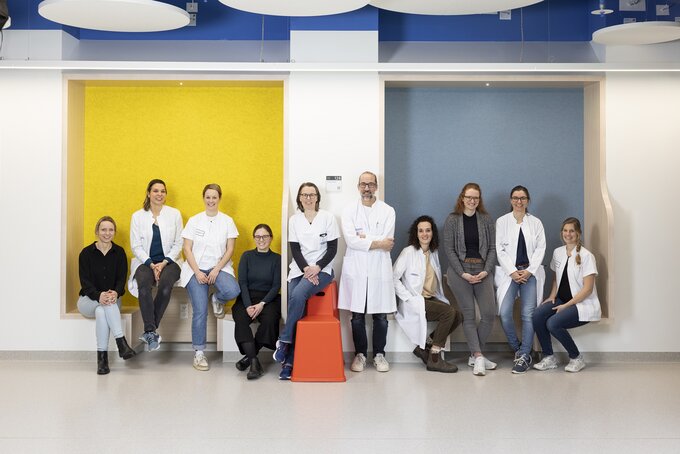
From left to right: Sandra Kircheis (diabetes educator, SPATZ e.V.), Dr. Johanna Weekes (specialist physician, diabetologist), Dr. Sonja Kloos (physician), Erika Leithold (M.Sc. psychologist), Dr. Franka Hodde (pediatric endocrinologist and diabetologist), Prof. Dr. Clemens Kamrath (head of the section), Olimpia Manzardo (physician), Swantje Timm (diabetes educator), Dr. Marie Ritter (specialist physician), Dr. Geeske Mühlschlegel (physician).
Prof. Hufnagel is a pediatric rheumatologist specializing in the diagnosis and treatment of childhood rheumatic diseases. Targeted treatment is only possible through accurate diagnosis of a specific rheumatologic disease. Treatment with modern biological agents requires regular checks of the effect and assimilation of the medication.
Another focus is recurrent fever syndromes, which today are exactly classifiable and for which there are several therapeutic options.
As an infectiologist, Prof. Hufnagel oversees all childhood infectious diseases. His special interests include chronic infections such as those of the bones and joints, tuberculosis and atypical mycobacteriosis. Moreover, he offers advice on vaccinations of all kinds, including travel vaccinations.
- Rheumatologist/Infectiologist/vaccinations
- Inflammatory joint and bone diseases
– e.g. Borrelia arthritis, juvenile idiopathic arthritis, incl. psoriatic arthritis, chronic non-bacterial osteomyelitis - Inflammation of blood vessels (vasculitis)
- Inflammation of skin or connective tissue
– Connective tissue diseases, systemic lupus erythematosus, juvenile dermatomyositis - Internal inflammation of the eye (uveitis)
- Relapsing fever syndromes
– e.g. Familial Mediterranean fever - Rare chronic infections – e.g. Tuberculosis, non-tuberculous mycobacteria
- Vaccination advice, incl. travel vaccinations
This department is a center for special genetic bone diseases such as osteogenesis imperfecta or achondroplasia, metabolic bone diseases and rare skeletal dysplasias. Both clinical and genetic diagnosis are offered.
It is possible to send X-ray images for assessment, then subsequently a targeted genetic examination and patient examination can be carried out.
The Center is involved in international skeletal dysplasia networks.
Information about the Metabolic Center is available on the Metabolic Center page.
Statistics

hepatology patients per year4800

endoscopies per year500