Movement Disorders
Since the development of stereotactic techniques in Freiburg in the 1950s, the treatment of movement disorders has been a central focus of the Department of Stereotactic and Functional Neurosurgery.
In the past, treatment mainly involved so-called lesion procedures, in which very small, precisely defined areas of the brain were permanently deactivated (for example, thalamotomy or pallidotomy). Over the past decade, however, deep brain stimulation (DBS) has become the standard surgical treatment for many movement disorders.
Deep brain stimulation involves implanting very thin electrodes into specific areas of the brain. These electrodes are connected to a small device placed under the skin, often called a “brain pacemaker”. The system sends electrical impulses to regulate abnormal brain activity.
A key advantage of DBS is that it is adjustable and reversible. The stimulation can be fine-tuned over time to improve symptoms, and the device can be switched off if needed – unlike earlier procedures that permanently altered brain tissue.
Conditions treated with deep brain stimulation
DBS is most commonly used to treat:
- Parkinson’s disease
- Certain forms of dystonia, such as generalized dystonia, cervical dystonia (torticollis), and tardive dystonia
- Various types of tremor, including essential tremor and tremor associated with multiple sclerosis
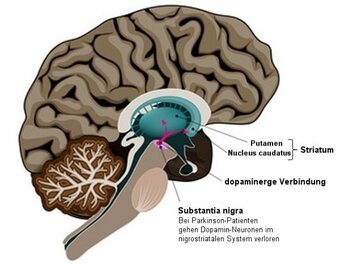
Image source: Parkinson's Disease ©designua, Fotolia
What happens in Parkinson’s disease?
In Parkinson’s disease, certain nerve cells in the brain that produce dopamine gradually stop working and are lost. Dopamine is an important messenger substance that helps transmit signals from the brain to the muscles and allows movements to be smooth and well coordinated.
When dopamine levels decrease, these signals are no longer transmitted properly. As a result, movements become slower, stiffer, or less controlled, which can lead to symptoms such as tremor, muscle rigidity, and difficulty initiating movement.
Interdisciplinary care
Patients and their families are supported through close collaboration between specialists in stereotactic neurosurgery, neurology, neuropsychology, neuropediatrics, and psychiatry. Treatment decisions are made jointly during interdisciplinary conferences and specialized consultation hours for movement disorders.
Our goal
Our aim is to develop an individualized treatment plan for each patient. We carefully consider all non-surgical treatment options first and weigh the potential benefits and risks of surgery to ensure the best possible outcome for every patient.