Orthopedics and Trauma Surgery
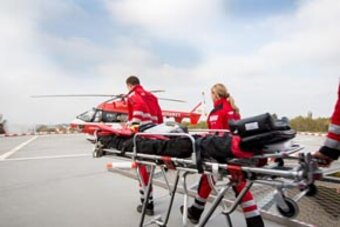
The Department of Orthopaedics and Trauma Surgery was established in 2002 through the merger of the former departments of Orthopaedics, Traumatology, and Sports Orthopaedics and Traumatology. It represents the full spectrum of orthopaedic and trauma surgery as defined by the German Medical Association’s unified specialist training. As a university-based maximum care center, the department treats more than 5,000 inpatients annually and performs approximately 5,500 surgical procedures in six operating rooms and one outpatient operating center.
The department offers comprehensive medical services, covering all aspects of orthopaedics, including conservative and pediatric orthopaedics, as well as the full range of trauma surgery, including the treatment of severely injured patients. In the field of sports orthopaedics, both recreational and professional athletes receive specialized care.
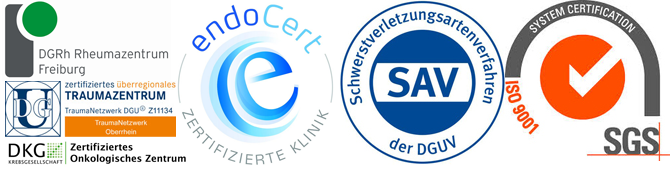
The clinic is certified as a Supraregional Trauma Center and as a Center of Excellence for Arthroplasty (maximum care level), reflecting its high standards in patient care and clinical outcomes.
The organizational structure is based on specialized teams focusing on distinct anatomical regions and subspecialties. These include sections for Trauma Surgery, Joint Replacement (hip and knee), Shoulder Surgery (including arthroplasty), Knee and Cartilage Surgery, Foot and Ankle Surgery, Septic Surgery, Pediatric Orthopaedics, Spine Surgery and Musculoskeletal Tumor Surgery. Rotations between these teams ensure comprehensive and well-structured specialist training.
An extensive physiotherapy department is closely integrated into patient care. In addition, a dedicated casting unit provides not only fracture stabilization but also corrective casts for all anatomical regions and custom orthopaedic devices. The full range of physiotherapy treatments is available, including manual therapy, occupational therapy, and various physical therapy modalities.
The research conducted at the Department of Orthopaedics and Traumatology focuses on clinical studies, biomechanics, and basic research, primarily in the field of cartilage tissue engineering.
Diagnostic & Treatment Services
Our department is a leading traumatology center in Germany and we provide our services to patients with traumas of any severity on a 24-hour basis. Surgery is rendered to people who have been involved in an accident and suffer from injuries such as spinal column and pelvis traumas, mono-traumas and injuries associated with different risk factors. All operations are performed using today’s best scientific and medical technology.
The range of services encompass traumas’ due to an accident, dactyloscopic operations to treat shoulder instability, arthroscopic shoulder surgery (for example treating a shoulder instability or shoulder cuff problem) and keyhole surgery on the knee to treat cruciate ligament injuries.
Also included in our realm of services are prosthesis or shoulder implantation and hip and knee prosthetic devices. Such prostheses are implanted using modern computer navigation and other special technologies.
Arthroscopic surgery of the knee, shoulder, ankle, elbow and hand joints is applied in our division. Modern treatment methods are used for meniscus and cartilage injuries. Our numerous methods for treating cruciate ligament and shoulder injuries, as well as rotator stabilization and reconstruction, are considered to be innovative.
An innovative method is involved in the use of various constructions for injuries to the shoulder cruciate ligaments and for rotator stabilization and reconstruction. Spinal Cord operations are performed in line with recent treatment technologies and methods and constitute another field of concentration in our clinic. This operation is especially important for elderly people with spinal cord injuries who require spinal cord fixation or vertebrae substitution.
The artificial replacement of joints destroyed by trauma or degenerative wear has been a well-established procedure for many years, enabling patients to regain pain-free function and mobility. With strict indication criteria and the highest surgical precision, endoprosthetic procedures achieve excellent long-term outcomes, based on state-of-the-art technology and individually tailored treatment strategies.
The treatment spectrum of the Arthroplasty Section at the Medical Center – University of Freiburg also includes the management of all complications following hip and knee arthroplasty, ensuring optimal results even in complex cases. In addition, endoprosthetic procedures are regularly performed in challenging clinical situations (e.g. dysplasia, severe deformities, post-traumatic osteoarthritis following joint fractures).
Hip Arthroplasty:
- Minimally invasive total hip replacement using the anterior AMIS approach
- Use of bone-preserving implants (e.g. short-stem prostheses)
- Age-adapted selection of bearing surfaces for optimal durability and biocompatibility
- Full spectrum of revision surgery, including complex exchange procedures up to custom-made implants for severe bone loss (e.g. pelvic reconstruction)
Knee Arthroplasty:
- Unicompartmental knee replacement (e.g. partial knee prosthesis) for localized joint degeneration
- Precise, individualized implantation techniques using state-of-the-art navigation systems
- Selection of implant systems based on ligament balance and bone loss to ensure optimal function
- Comprehensive revision surgery, including complex exchange procedures up to total bone replacement
Long-standing clinical expertise and the use of innovative technologies ensure treatment at the highest level, with the goal of achieving long-term improvement in quality of life, pain relief, and mobility.
Children traumatology is a further focus in our department. The doctors working in this section are specialized in the correction of skeletal deformities. The treatment of young children, depending on their age, is carried out together with the Center for Pediatrics and Adolescent Medicine, which have special consulting hours for children.
Ankle and hind foot:
- Impingement syndromes of the upper and lower ankle
Minimally invasive, arthroscopic removal of various impingement syndromes (tibiotalar impingement at the ankle, symptomatic os trigonum) for early functional follow-up treatment, especially in competitive sports. - Cartilage diseases of the upper ankle
Stage-dependent therapy of cartilage damage, osteochondral lesions or osteochondritis dissecans (OD), arthroscopy of the upper ankle and arthroscopic or open cartilage regeneration therapy procedures (microfracturing, AMIC, minced cartilage, spongiosa plasty). - Injuries to ligaments and tendons, as well as ligament instabilities of the ankle
Acute ligament sutures, ligament plasty for chronic instabilities, tendon replacement plasty - Sports injuries and complex treatment of fractures of the upper and lower ankle, as well as the foot
- Treatment of osteoarthritis of the upper and lower ankle
Conservative therapies, shoe fittings, joint fusions (arthrodeses) of the upper and lower ankle, ankle endoprostheses (in collaboration with the division of Arthroplasty) - Treatments for axial misalignments of the upper and lower ankle
Minimally invasive and open corrective osteotomies of the distal tibia and calcaneus - Acute and chronic Achilles tendon pathologies
Minimally invasive and open suturing of fresh ruptures, reconstruction of the Achilles tendon using tendon grafts/transfers, treatment of Haglund exostoses
Foot:
- Congenital and acquired deformities of the fore and mid foot
Correction of hallux valgus deformity using the latest implants in open and minimally invasive techniques for early functional aftercare, correction of hammer and claw toes, correction of tailor's bunion - Therapy for fractures/ dislocations of the fore and hind foot
Osteosynthesis of fresh fractures with angle-stable plates, correction of post-traumatic misalignments, minimally invasive stabilization of metatarsal-V-base fractures. - Flat feet in adults
Orthotic shoe fitting, insole fitting, orthotic fitting and surgical reconstruction of the flat foot to straighten the foot's longitudinal arch and reduce the forefoot abductus. - High arches in adults
Orthotic shoe fitting, insole fitting, orthotic fitting and surgical corrections of the high arch. - Treatment of foot arthrosis
Stiffening operations using different techniques, if necessary with accompanying axial corrections - Deformities of the foot associated with diabetic foot syndrome (Charcot neuropathy)
Modern reconstruction of the mid and hind foot, operations to reduce plantar contact pressure and reduce the risk of ulcers, partial amputations to preserve as much of the foot as possible in the case of serious infections.
The Division of Sports Orthopedics and Sports Injury Surgery, which deals with sports orthopedics and sports traumatology, is well known throughout Germany. Approximately 4,000-5,000 athletes from the entire country are examined and treated in this department annually. As a matter of fact, the German Olympic teams have their medical check-ups here in our clinic.
Together with the Comprehensive Cancer Center Freiburg the Department of Orthopedics and Trauma Surgery offers surgical treatment of bone tumors. First a biopsy is taken. The results are then discussed at the interdisciplinary tumor boards by orthopedists and trauma surgeons, oncologists, thoracic and plastic surgeons, radiation therapists, radiologists and pathologists in order to find the best treatment option for each individual patient.
The Division of Orthopedics performs approximately 1,500 operations yearly, with the main specialization being spinal cord surgery, including tumor resection, intervertebral disk prosthesis, navigational endoprosthesis replacement and cartilage surgery with the transplantation of cultivated cartilage cells on the knee and hip joint. We also deal with toe and leg corrections as well as the spectrum of orthopedic surgery.
Our division carries out diagnostics and treatment as well as scientific research and development in the area of replacing bone and cartilage tissues (tissue engineering) and the inventions of various implants. We have a specialized attached center involved in the research, cultivation and application of tissue and cartilage engineering. The spectrum of performed operations includes rejoining cartilage fragments, bone stimulation to form new osseous tissues (for example at the early arthrosis stages) and osseocartilaginous transplantation.
Minimal invasive surgery and computer controlled equipment are used in spinal cord operations. These reduce both the load on the patient and the degree of risk and complications. Modern methods include kyphosis and spinal cord plastic reconstruction, which are applied for osteoporotic fractures. A specialized interdisciplinary department was opened in 1998 at our medical center, which manages treatment and diagnostics of talocrural joint disease as well as erysipelatous inflammations of the leg accompanied by diabetes mellitus.
Rehabilitation takes place either in the Medical Center - University of Freiburg itself, or in specialized rehabilitation centers equipped with thermal springs and gyrotonic devices. Mooswaldklinik and Rheintalklinik are two of our renowned partners of the Medical Center - University of Freiburg, accommodating patients after surgeries.
Statistics

medical doctors42

in-patients per year3.800

out-patients per year30.000

emergency patients per year22.000

in-patient beds93
- 6 operating rooms and an outpatient surgery center
- Under Top 3 in Germany for treatment of polytraumas
- up to 5,000 athletes are examined and treated in our department annually
- German Olympic teams have their medical check-ups in our department
Surgeries per year:
- Traumatologie / Unfallchirurgie: ca. 1800
- Orthopädie: ca. 3600
- Sports orthopedics and traumatology: approx. 670
- Pediatric orthopedics: approx. 250
- Arthroplasty / joint replacement: approx. 700
- Spine surgery: approx. 250
- Pediatric traumatology: approx. 600
- Shoulder surgery: approx. 560
- Elbow surgery: approx. 150
- Knee joint surgery / cartilage surgery: approx. 810 / approx. 290
- Foot surgery: approx. 250
- Osteoporosis: approx. 350
- Tumor surgery: approx. 300
Our physicians
Dr. Jan Kühle
Foot and ankle surgery
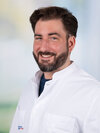
Dr. Moritz Mayr
Joint replacement surgery
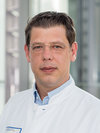
Professor Dr. Georg W. Herget
Tumor orthopedics
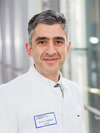
Prof. Dr. Kaywan Izadpanah
Knee surgery
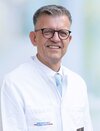
Dr. Martin Jaeger
Shoulder surgery
Dr. Kerstin Kuminack
Pediatric traumatology
PD Dr. Ferdinand Wagner
Traumatology
Professor Dr. Kilian Reising
Musculoskeletal tumor surgery
Dr. Benjamin Erdle
Traumatology
Dr. Tayfun Yilmaz
PD Dr. Markus Siegel
Arthroplasty Center Coordinator
Dr. Samuel Beck
Septic Surgery and Osteology
PD Dr. Nils Mühlenfeld
Spine Surgery

Prof. Dr. Johanna Kubosch